
News
Senate Seeks Abolition Of Boko Haram Rehabilitation Programme

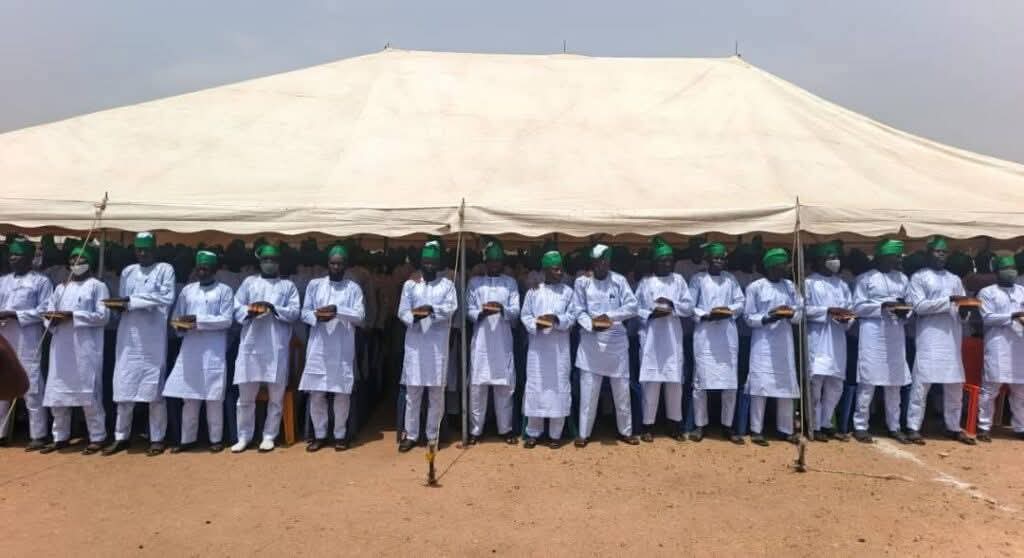
The Nigerian Senate has called on the federal government to end the rehabilitation and reintegration programme of Boko Haram members, describing it as ineffective given the deteriorating security situation in Nigeria.
The resolution follows a heated debate that erupted following the death of former Nigerian Army spokesman, Major General Rabe Abubakar (retd) and other senior military officers by gunmen in the country.
While debating the bill, sponsored by Senator Abdul’Aziz YarAdua, the senators said that despite the federal government’s efforts to physically rehabilitate Boko Haram members by reintegrating them into society, the insurgency in the northeast of the country has not stopped.
Read Also: Terrorists Attack School in Borno, Kidnap Students Writing NECO Exams – Police
Senator Joseph Ikpea, who led the call for the abolition of the Boko Haram rehabilitation programme, said it was ineffective given the recent increase in Boko Haram attacks in Nigeria.
Several senators, including Adams Oshiomhole, said that amnesty and rehabilitation of former Boko Haram members “make no sense” in the current situation in Nigeria, calling for a law to abolish the programme.
The lawmakers also resolved to meet with President Bola Tinubu to discuss the issue and other security issues in Nigeria.
The programme, known as “Operation Safe Corridor”, was launched in 2016 under former President Muhammadu Buhari to de-radicalize, rehabilitate and reintegrate Boko Haram members into society.
Read Also: Ajiya Expresses Concern Over Rising Insecurity, Banditry, and Cattle Rustling
Some states in the North-East, including Borno state, where the Boko Haram insurgency originated, have adopted a program to reintegrate Boko Haram fighters into society.
Data shows that by June 2026, 9,680 Boko Haram defectors had benefited from the program.
However, the program has drawn controversy, with some saying it will do little to end the Boko Haram insurgency, which is largely ideological.
Critics have also expressed concern that governments are more concerned with rehabilitating Boko Haram fighters than with the families and friends of those affected.
The United Nations says hundreds of thousands of people have died in the Boko Haram insurgency, which began in 2009 and has displaced millions in the Lake Chad region, mainly in Nigeria and Niger.

EFCC Arraigns Two FCDA Staff Over Alleged Property Fraud

FG’s Reversal On WAEC/NECO Fees Hike, A Victory For Millions Nigerians – Atiku

Senate Seeks Abolition Of Boko Haram Rehabilitation Programme

Minister Wike’s Conduct Poses Threat To National Security- Buratai

2026 Budget: Kano Govt Proposes N1 Trillion
